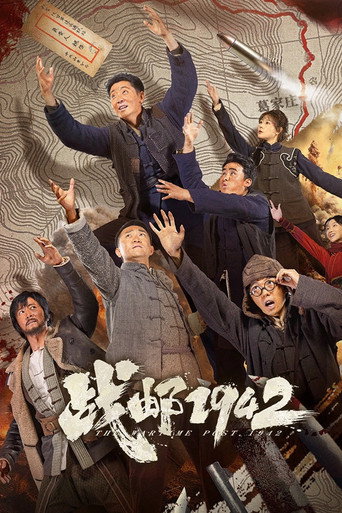
The pitch was appealing on paper: iQIYI and the Shandong partners position this as China's first screen work about the wartime postal service (战邮), the "comedy shell wrapped around a serious core" that producer Zhang Chao described, with laughs in the first half and tears in the second, anchored by the true history of the Shandong Wartime Post General Bureau founded in 1942 and the 468 postal fighters who died on the life-and-death mail routes. Three village lads — Xiwang, Gou'er and Abacus, with Hu Yu along — stumble onto a top-secret Party letter and run a gauntlet of Japanese sweeps and bandits to deliver it. It's a natural road-movie structure with real suspense built into the premise, and the project carries genuine historical weight. But somewhere between conception and screen, the calculation falters, and the film's three promised registers never arrive at the same time.
Start with the comedy: for a comedy, there is not much to laugh at. The light-comedy opening plays like a TV skit stretched past its breaking point, and the humour nudge-winks instead of earning its smiles. As drama, everything feels flat — the companions who fall along the way are sketched rather than written, so the sacrifice beats land like a plot checklist. Take the death of the second-in-command: a lovely ballad swells over the scene, the image softens, the tears are ordered up on schedule — and yes, the song is beautiful. But a beautiful song cannot replace the missing structure. We haven't lived with this man long enough to lose him, the chase around the scene never establishes where anyone is or why this death was inevitable, and the music is doing the work the screenplay declined to do. The war material is the strangest casualty of all: the set pieces feel measured out on paper — patrol here, ambush there, loss on schedule — yet someone missed a calculation somewhere, because the geography of the pursuit never convinces and the danger rarely feels unmanaged.
The root problem is that director Liu Xuandi never decides what film he is making. The tonal shifts are not transitions but hesitations — comedy, melodrama and war action take turns at the wheel, and no register sustains long enough to build a rhythm. There is an admirable film buried in this subject: the real wartime post deserves the authenticity the team's research trips promised, and the history alone — 2,000 couriers through blockhouse lines, teenage martyrs, unnamed dead — is engine enough. What's on screen is a well-intentioned, competently mounted tribute that hedges every bet: too mild to be funny, too procedural to move, too tidy to thrill. Lovely ballads, lovely sentiments — but a score is a garnish, not a foundation, and this one keeps being asked to hold up a house with no beams. A meaningful subject, a miscalculated film — and a director still searching for his direction.